

Conclusion
Chemicals play a key role in a variety of processes, from scientific research to industrial production and everyday life. However, their misuse can lead to serious consequences, from minor burns and poisoning to explosions and fires. That is why strict compliance with safety instructions is not just desirable, but an absolutely mandatory condition when working with any chemicals.
Familiarization with the documentation is the first step towards security
Before starting to work with any chemical reagent, it is necessary to carefully study the safety data sheet (SDS/MSDS). This document contains important information, including:
-Identification of the substance: name, chemical formula, CAS number.
-Dangerous properties: toxicity, flammability, reactivity, corrosion activity.
-Precautions: rules for storage, handling, and use of personal protective equipment (PPE).
-Emergency measures: first aid in case of poisoning, spillage, fire.
-Storage and disposal conditions.
Ignoring SDS/MSDS is unacceptable and can lead to unpredictable and dangerous situations.
Personal protective equipment (PPE) is your reliable barrier
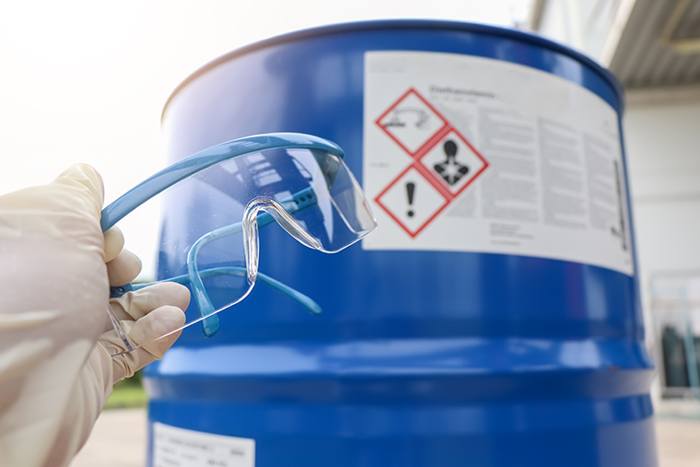
Proper use of PPE is an essential part of safe handling of chemicals. The choice of specific protective equipment depends on the properties of the substance used and the nature of the work performed. The main PPE include:
-Safety glasses or face shields: to prevent splashes and fumes from getting into the eyes.
-Gloves: made of chemically resistant materials (nitrile, latex, neoprene, etc.) to protect the skin of the hands. The choice of glove material depends on the specific reagent.
-Lab coats or aprons: to protect clothing and body skin from accidental ingress of substances.
-Respirators or gas masks: when working with volatile, toxic or dusty substances for respiratory protection. The type of respirator must correspond to the hazard class of the substance.
-Closed shoes: to protect the feet from spills and falling objects.
Before use, it is necessary to ensure the integrity of the PPE and to put them on correctly.
Handling rules — incident prevention
Following simple rules for handling chemicals will help to avoid many troubles.:
-Never taste chemicals or inhale their vapors directly.
-Work with volatile and toxic substances only in well-ventilated areas or under a fume hood.
-Use only clean and labeled dishes and equipment.
-Do not mix chemicals at random, as this can lead to unpredictable reactions, the release of heat, gases, or even an explosion.
-When transferring liquids, use special devices (pipettes, pears) and avoid sudden movements.
-Wash your hands thoroughly after handling any chemicals, even if you have used gloves.
-Do not eat, drink, or smoke in work areas where chemicals are used.
Storage and disposal
Proper storage of chemicals prevents accidental mixing, leakage and degradation. The following rules must be followed:
-Store chemicals in designated areas, away from heat sources and direct sunlight.
– Separate incompatible substances (for example, acids and alkalis, oxidizing agents and reducing agents).
-Use sealed and labeled containers.
-Regularly check the integrity of the packaging and the shelf life of the reagents.
The disposal of chemical waste must be carried out in accordance with established rules and regulations. Never pour chemicals into the sewer or ordinary garbage. There are special disposal procedures for each class of waste that must be followed.
Emergency response: preparedness for the unexpected
Despite all precautions, emergencies may occur. Therefore, it is important to know how to act in such cases.:
-In case of chemical spillage: immediately protect the scene, use appropriate means to neutralize and collect the spilled substance (absorbents, sand, etc.), dispose of the collected material in accordance with the regulations.
-In case of contact with the chemical on the skin or in the eyes: immediately rinse the affected area with plenty of water for 15-20 minutes. Seek medical help if necessary.
-In case of poisoning by vapors or gases: take the victim into the fresh air and ensure rest. Seek medical help if necessary.
-In case of fire: use appropriate extinguishing media (fire extinguishers, sand, etc.). If it is impossible to control the fire, evacuate immediately and call the fire department.
Conclusion
Safety when handling chemicals is a set of measures that require care, responsibility, and strict adherence to instructions. Knowledge of the properties of substances, proper use of PPE, compliance with the rules of handling, storage and disposal, as well as readiness to act in emergency situations are the key to the health and safety of all those who deal with chemicals. Remember that ignoring safety regulations can have serious and irreversible consequences. Be careful and take care of yourself!
Leave a Reply